
Nobody’s Listening · The artists
The artists and their stories
Alongside the virtual reality experience, Nobody’s Listening brings together paintings, drawings and sculpture by Yazidi, Assyrian and Christian artists. Each responds in their own way to the genocide of 2014 and to what has happened since. Their work and their stories, taken from the exhibition catalogue, are shown below.
Ivana Waleed
Yazidi artist, b. 1996, Germany
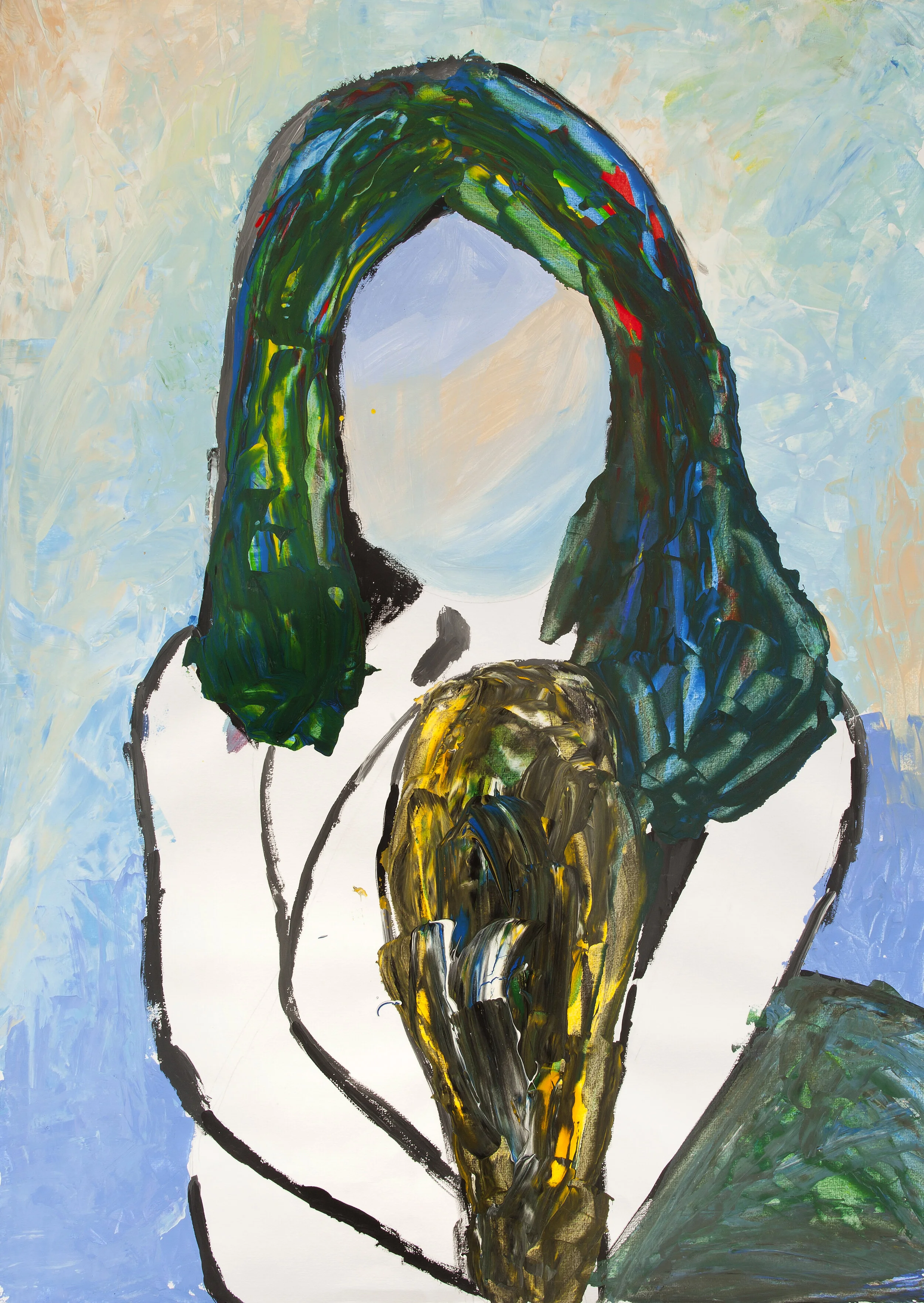
Ivana is a young Yazidi artist from the village of Tel Qasab, near Sinjar in northern Iraq. She endured many months of brutality and suffering in ISIS captivity, but she does not refer to herself as a “survivor” because she does not consider herself a victim. By escaping her captors, she says she has beaten ISIS, and she now works tirelessly to bring perpetrators to justice. Ivana remembers a simple but happy village life with her parents and many siblings before the genocide of the Yazidi community by ISIS began in August 2014: “We didn’t have many opportunities, but we were still happy and tried to use the opportunities we had.” She pursued her education in the knowledge that her options were limited without a degree: “Women especially didn’t have many opportunities; they usually do the housework.
That’s why I wanted to be a doctor – I wanted to be a role model to other women.” Now living as a refugee in Germany, her ambition to work as a doctor remains. The special-quota project of the German federal state of Baden-Württemberg, which settled 1,100 Yazidi women and children, gave Ivana what she calls a “golden chance” to start a new life. “I am very proud of the people working on this project,” she says, “because they have saved the lives of others. If these people had stayed in Iraq, I don’t know what would have happened to them.”
Read the full storyShow less
The challenge of adapting to a radically different culture in Germany was significant, especially the need to learn a new language. Everything Ivana once had in Iraq was suddenly lost, and she had to begin again from zero. Yet she says that the German people have been welcoming and supportive, and that she does not consider the country to be her second home, but rather her “first home.” One of the support initiatives of the Baden-Württemberg project is art therapy, where participants draw and then discuss their art works and related emotions. Ivana’s untitled painting of a faceless woman was the product of just two such meetings in 2019.
She reveals that she had wanted to draw a face for this woman, but ultimately felt unable: “When I stand in front of this picture, I think it is me, and when other women stand in front of it they should think the same, because this woman represents every one of us. If she had a face it would determine whether she is sad or happy, but nobody could be sure; each woman who looks at the painting should make her own decision as to what she sees and what name the painting should have.” Ivana is hopeful that more Yazidis may receive the support from which she has benefited, and she insists that there is “no chance for the community without people supporting us from outside.” She is thankful for the ongoing support from organizations such as UNITAD but says there is still much work to do: “Half of our people are living in wrecked houses, half of them in tents. This is not the way of life we wanted for ourselves.
Supporting oppressed people in our societies is really important.”
- Works in the exhibition
- Untitled · 675 x 880 mm · Acrylic on paper
Thabit Mikhael
Assyrian sculptor and painter, b. 1963, Iraq
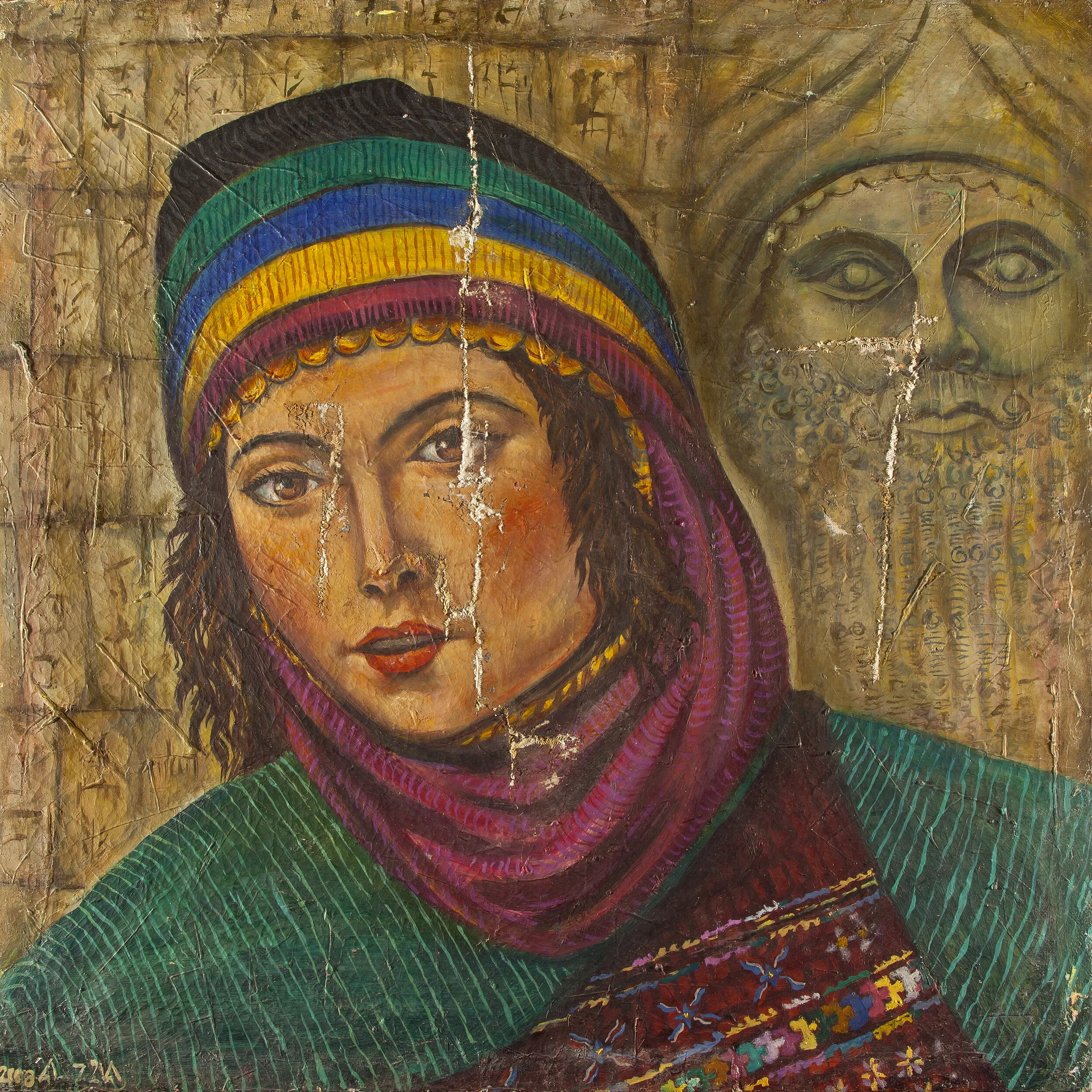
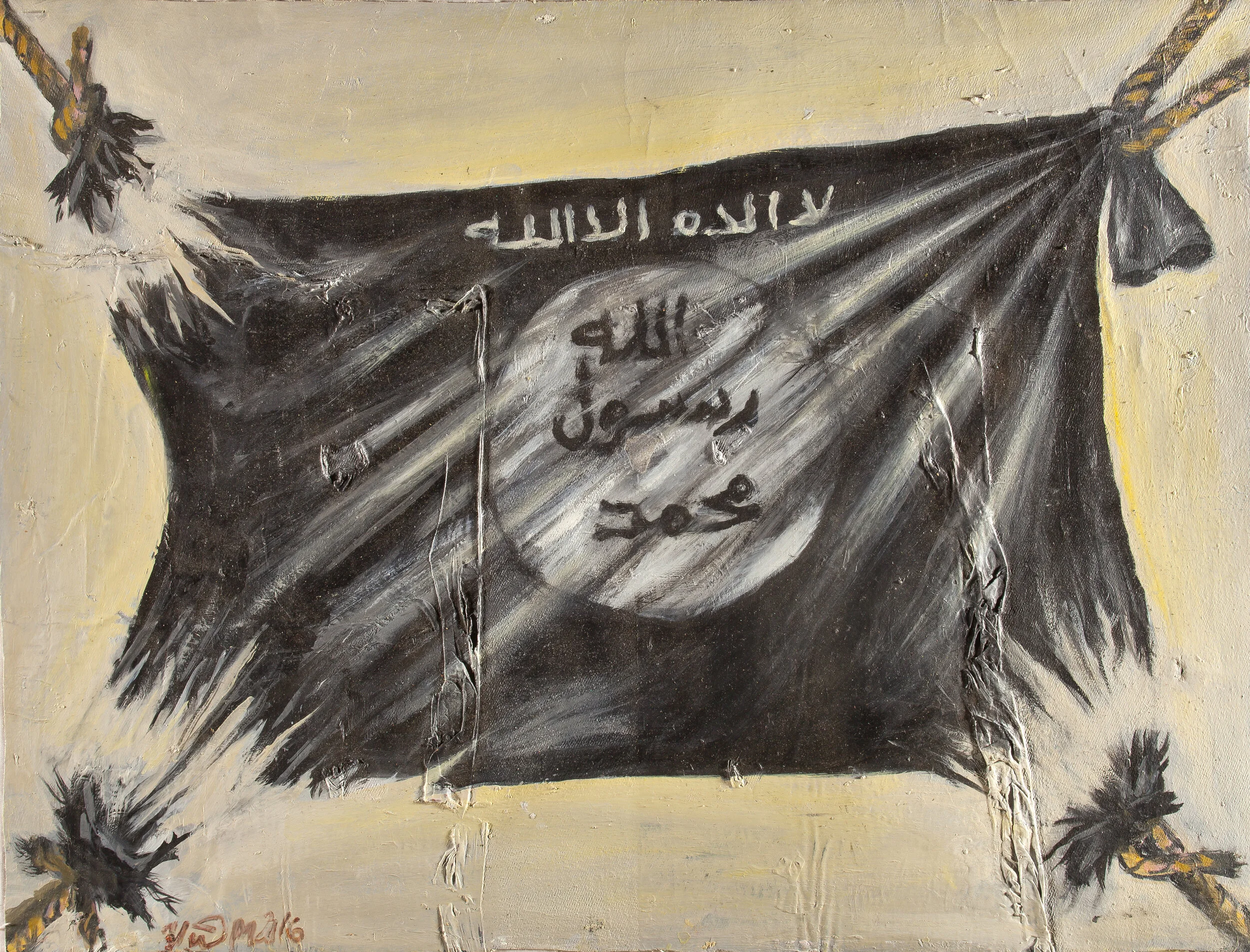
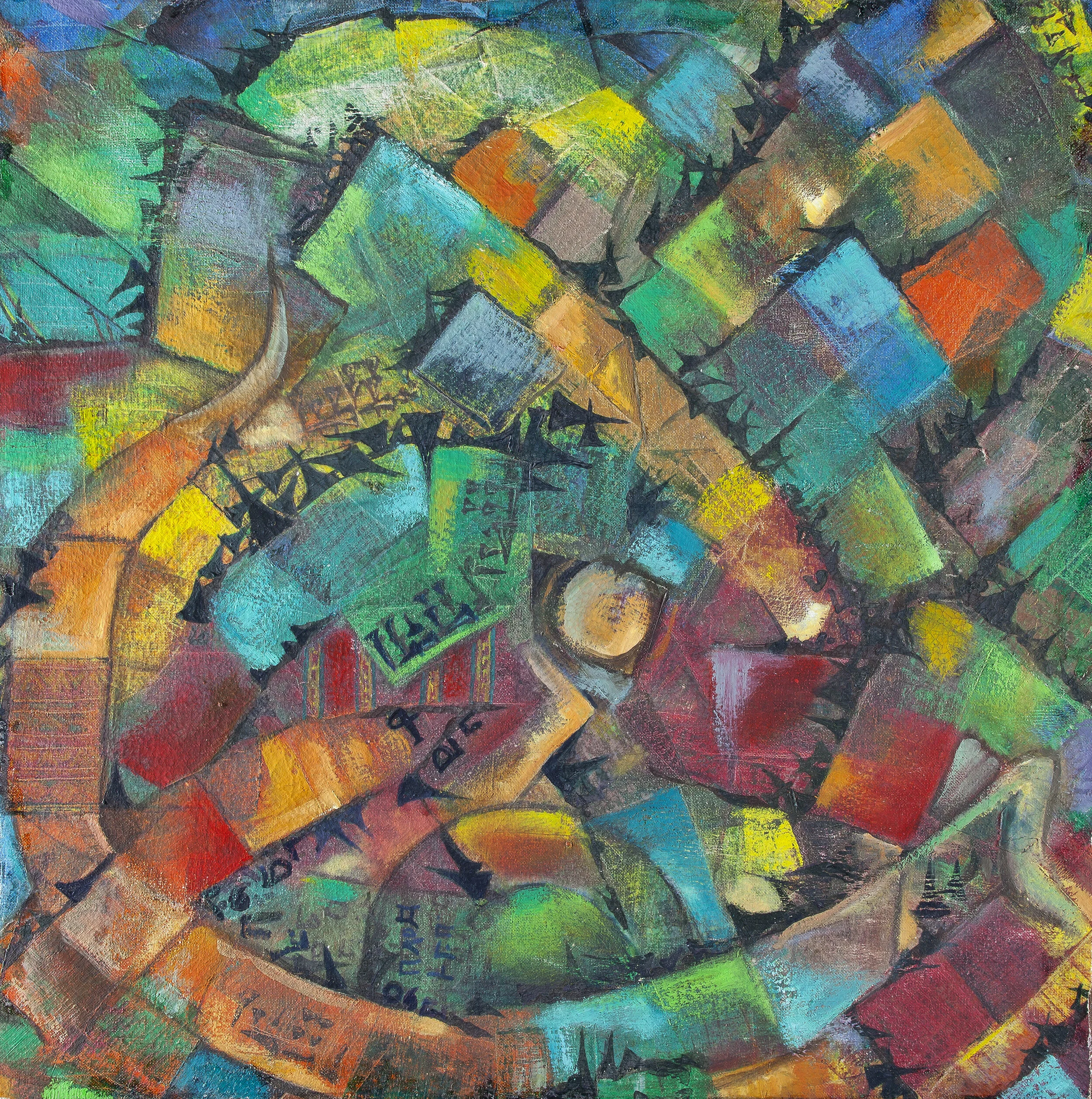
Thabit Mikhael is an Assyrian sculptor and painter from Qaraqosh, also known as Bakhdida, in northern Iraq. He graduated as an artist from Baghdad University, and was producing sculptures for local churches that had been attacked by terrorists even before ISIS targeted his community in 2014. The Assyrians have some of the most ancient cultural roots in the region, and Thabit explains that he fell in love with art because of his historic surroundings: “The main reasons I wanted to be an artist were the circumstances around us. There are Assyrian artefacts everywhere in Nineveh, there are statues and sculptures all around us.” At the end of June 2014, after ISIS had captured nearby Mosul, there was a mortar attack on the town, serving as an early warning to the Assyrian community that they might be forced to flee their homes.
Thabit describes a time of great fear and anguish in the time between that initial attack and the arrival of ISIS in his hometown. Eventually around 50 of the ca. 40,000 population of Bakhdida and a neighbouring town stayed behind, their fates unknown. Thabit says that many families and old people to escape: “Fortunately we could flee and the disaster was not as bad as what happened to the Yazidis in Sinjar.” Thabit was able to flee to Ankawa, the predominantly Christian suburb of Erbil. Months after Bakhdida was liberated in October 2016, he returned to the town and participated in a project to clean ISIS graffiti from the walls and replace it with Assyrian language and hopeful, beautiful artworks.
Read the full storyShow less
Thabit’s own artworks are closely linked with Assyrian identity. His painting A Girl from Nineveh depicts a young woman in the traditional clothes of the Bakhdida community with the face of Lamassu, the protective deity of the Assyrians, in the background. The work now bears the scars of ISIS desecration, as images of women’s faces in particular were targeted, and indeed all the statues in Thabit’s house were destroyed. Islamic State adhered to the Islamic tradition of aniconism - the avoidance of images of sentient beings. Though there is no explicit reference in the Qur’an that forbids the representation of living forms, the practice stems from the group’s strict prohibition of idolatry.
Syriac Letters celebrates Assyrian identity and the Syriac alphabet, as Thabit proudly explains: “This language is taken from the first alphabet in the world, the same root created the first language in the world. My ancestors created cuneiform, then the Akkadian language, until we reached the alphabet that is created in this language.” After fleeing his home, Thabit produced The Destruction of ISIS, a powerful and emblematic image of an ISIS banner torn from its fastenings. Thabit says that the most important step for local authorities to take now is to counter the radicalism of the various factions surrounding his community, and to stop designating the Nineveh plains as disputed areas. He also pleads for support for the Assyrian diaspora, “for our people all around the world to return to our homeland.”
He calls on governments around the world to help the Assyrian people to strengthen their community and to safeguard their very existence.
- Works in the exhibition
- A Girl from Nineveh · 768 x 768 mm · Oil on Canvas
- Syriac Letters · 575 x 575 mm · Acrylic on Canvas
- The Destruction of ISIS · 762 x 520 mm · Acrylic on Canvas
Nahrin Malki
Assyrian artist, Sweden
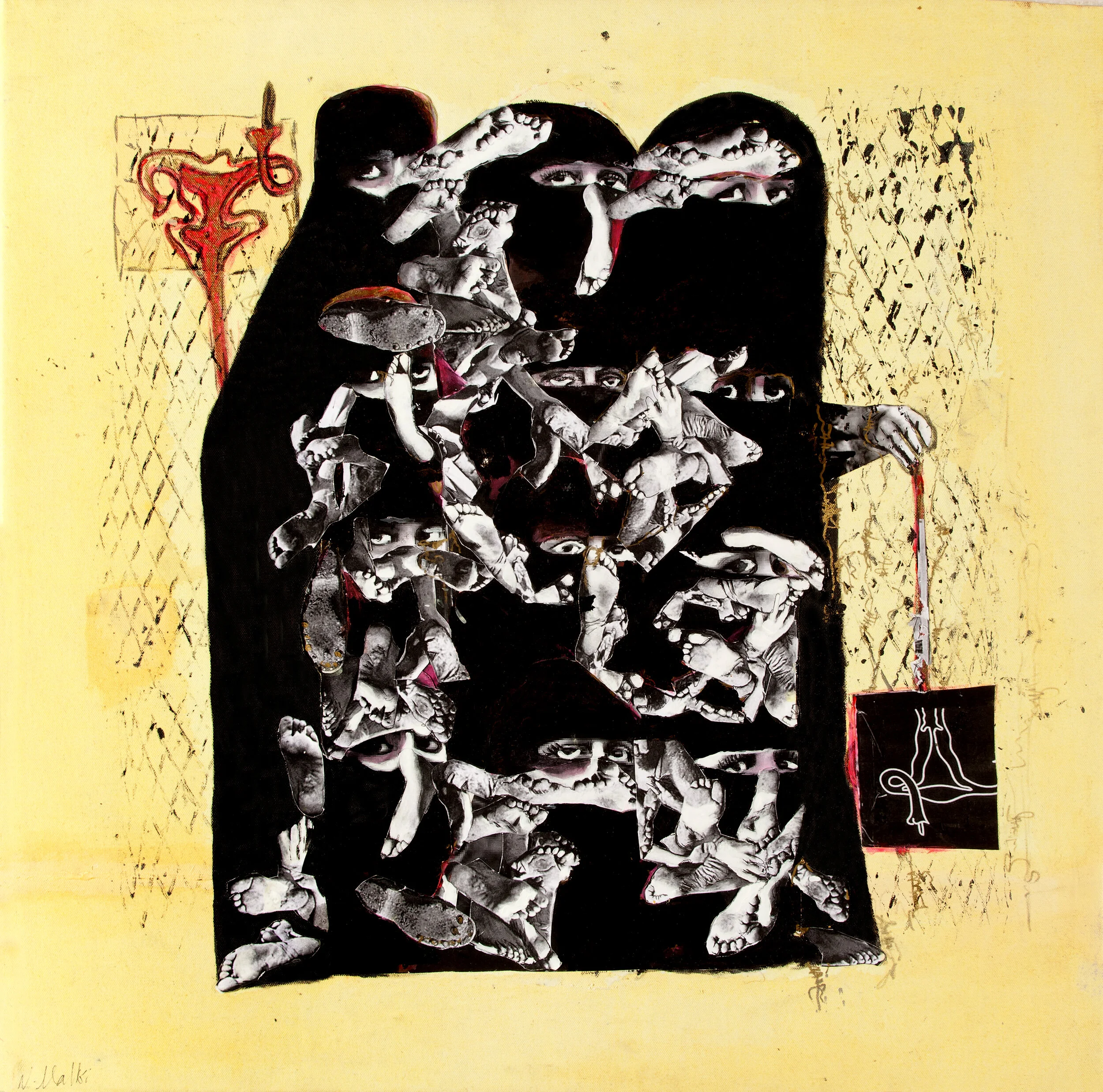
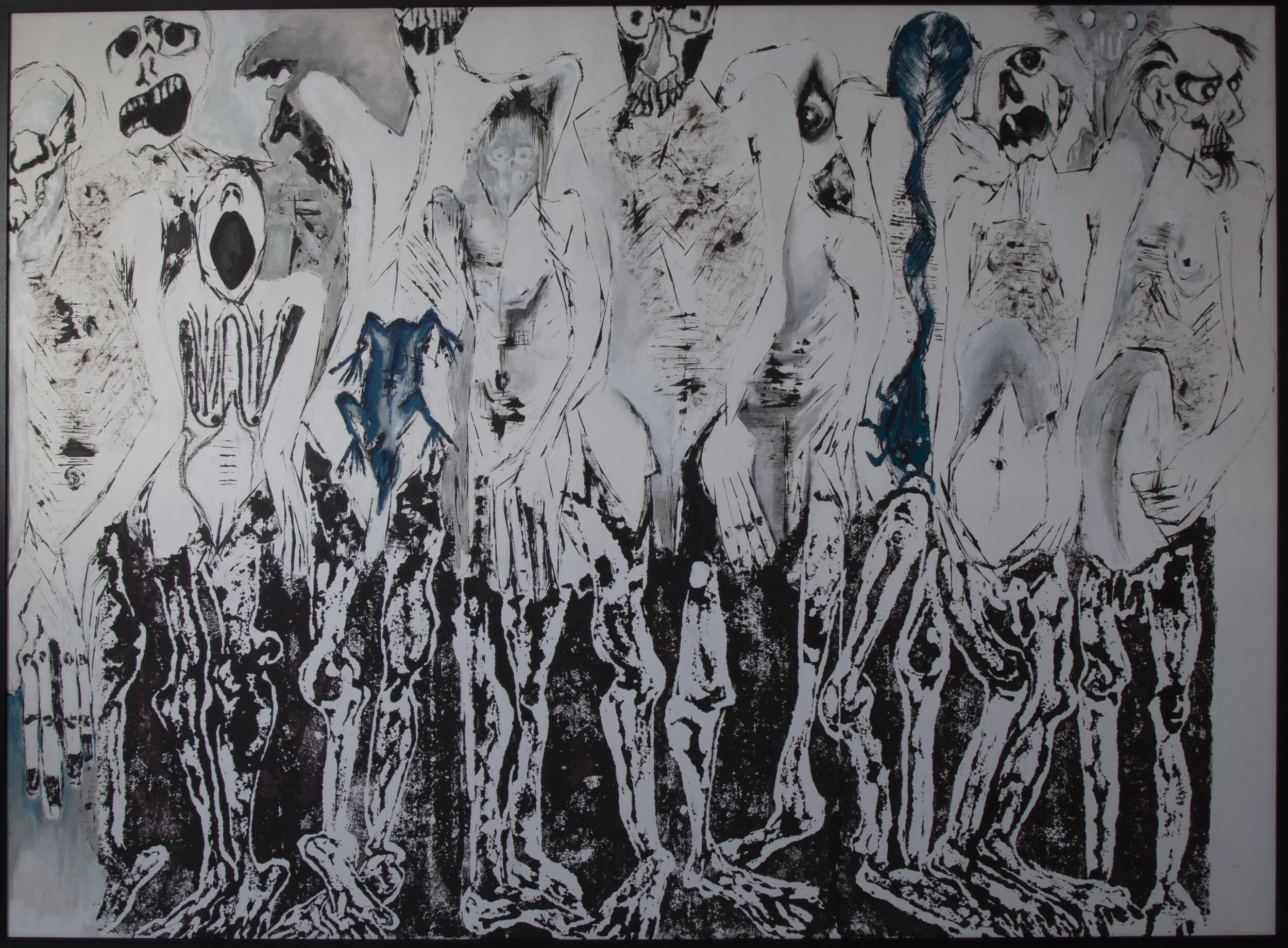
Nahrin Malki is an Assyrian professional artist and painter currently living in Sweden. Born in Syria, she fled to the Netherlands almost two decades ago, when the Assad regime began to attack the Assyrian community, which has some of the most ancient cultural roots in the region. Indeed, the Assyrian plight in Iraq and Syria is similar to the Yazidi experience, with tens of thousands of people driven out of their ancestral lands. Nahrin grew up in a secure and liberal family environment where art and learning were encouraged. She was always drawing as a child, even copying stickers for friends who could not afford them, yet she felt trapped and unable to express herself under a regime which suppressed artistic freedoms and creativity. It was in the Netherlands that she was finally able to realize her artistic potential, studying at the AKI Kunstacademie in Enschede: “The Dutch system gave me the freedom to express myself and I immediately felt comfortable; they focused on humanitarian aspects in art and gave meaning to my work”, Nahrin explains.
Her main objective now is to connect the Assyrian people with their heritage and collective experience, through the central theme of suffering in her artwork. The Assyrian diaspora share collective memories of pain, and such communities need help to rehabilitate their lands and repatriate their people. Nahrin wants to remind the international community that Assyrian culture “is very rich and can enrich international culture – our civilization gave a lot to the world.” She works for the recognition of her people as an official ethnic minority in Iraq and Syria, and for the protection of their basic right to practise their religion: “The only solution we can come up with is that they give us a safe haven, with autonomy to protect ourselves, because we do not feel safe among the other groups”, says Nahrin. In her artwork Nahrin combines diverse techniques and materials to move away from the rigidity of traditional art. While black is a dominant colour throughout, she experiments with other colour palettes and says: “I do not pick the colours – the colours tend to pick me.”
Read the full storyShow less
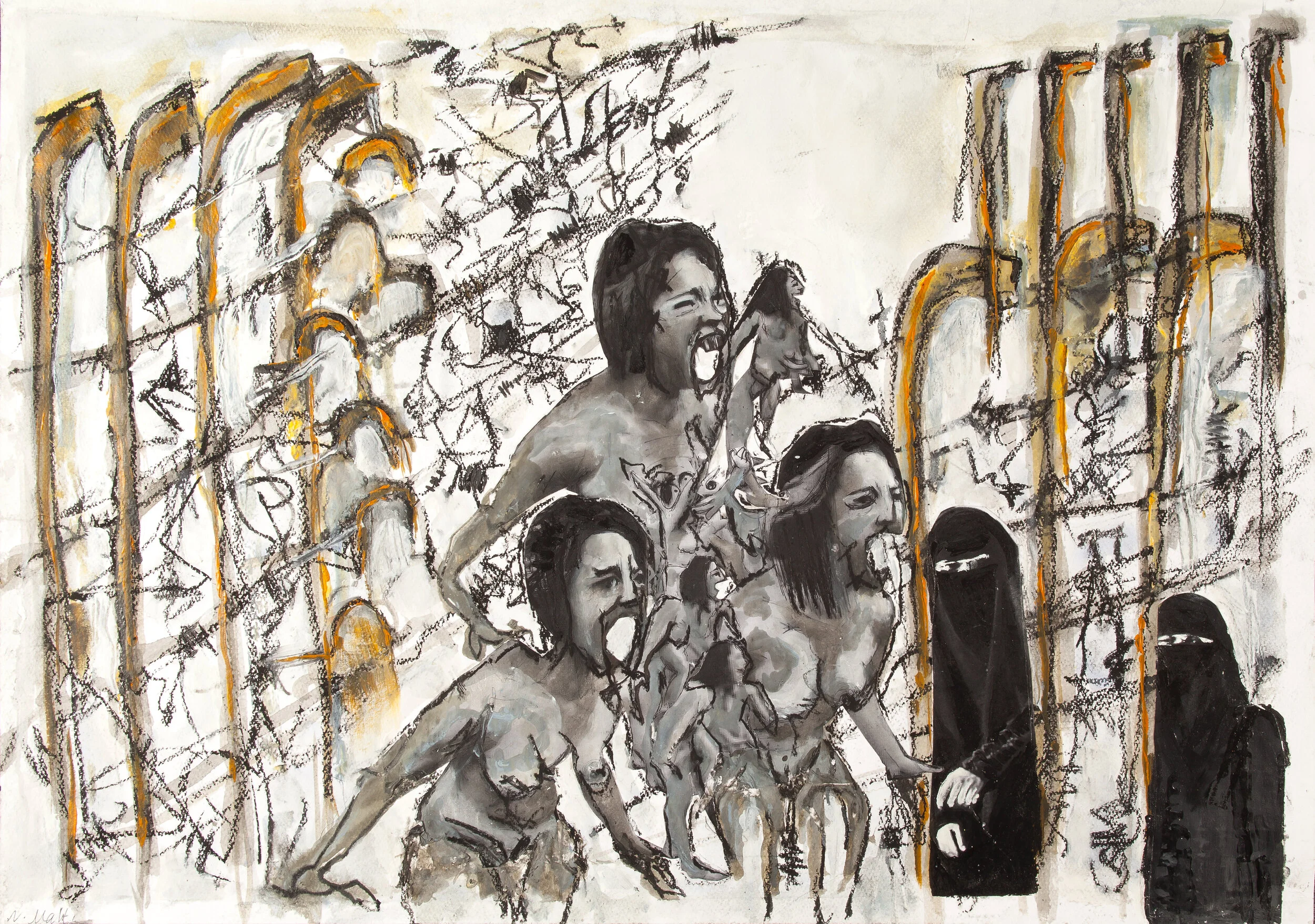
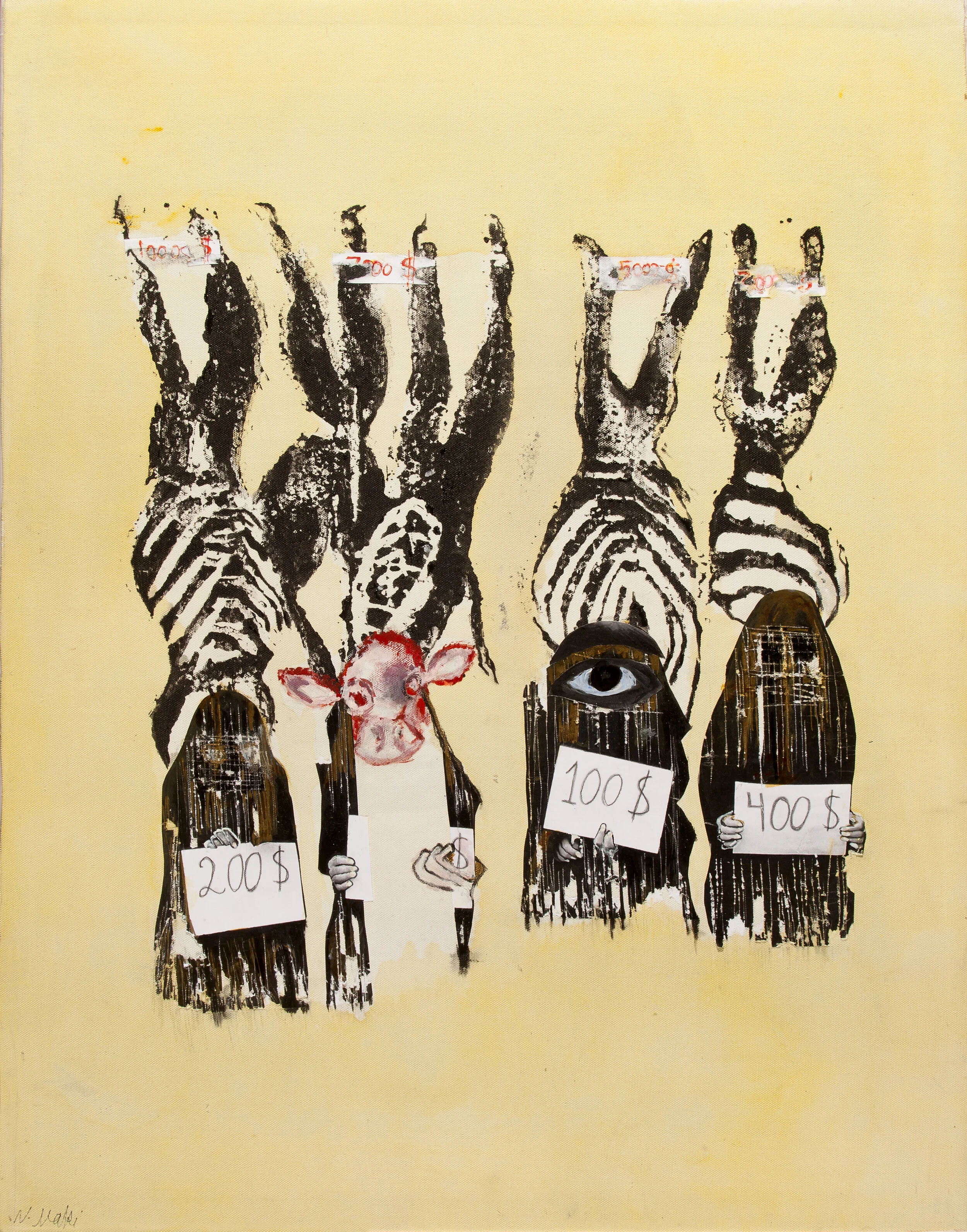
In her painting “A Scream” Nahrin shows the contrast between what she calls the feminist movement in Europe, where women can be naked, and the Middle East, where women are forced to cover up. “Nineveh” is based on a real-life image, depicting a woman carrying a cross, as when the Assyrians were driven from their villages. Other women are shown covered and confined in captivity, while the hands opposite them reach out for help. Another composition based on a real image is “Sales of Women”, which shows four Yazidi women taken by ISIS and sold as chattel abroad. Here the women are compared to animals, represented by the carcasses hanging above them.
Poignantly, the women’s price tags display lower values than those of the animals. For Nahrin, the restitution of Assyrian culture is a priority: “We have been forgotten about. We want to rebuild our schools that can teach our language and culture, and we want our books and historical artefacts returned to us. Churches in particular are cultural centres of our history since we do not have a country.” She explains that through her artwork and advocacy, she wants to help all persecuted minorities, and not just the Assyrians: “I want to talk about and represent other people who are being killed and brutalized. At the end of the day I am also human, and we are all brothers and sisters in humanity.
As an Assyrian I can feel the pain of other people around the world who are suffering.”
- Works in the exhibition
- Sales of Women · 580 x 720 mm · Mixed Media on paper
- The Screaming Womb · 690 x 690 mm · Mixed Media on paper
- A Scream · 880 x 675 mm · Mixed Media on paper
- Nineveh · 880 x 675 mm · Mixed Media on paper
- The Suffering · 1735 x 1265 mm · Mixed Media on paper
Salam Noh
Yazidi artist, France
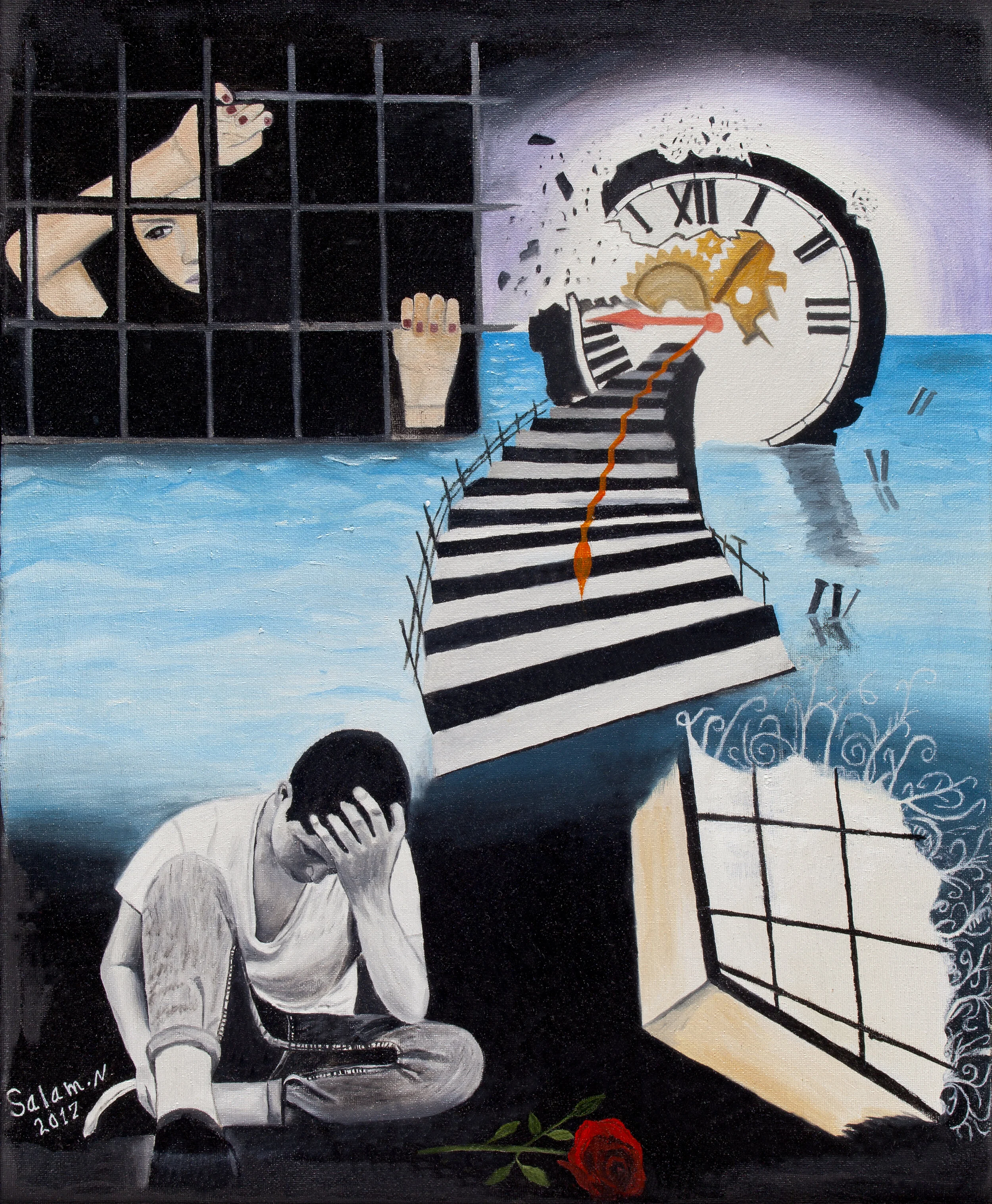
Salam is from the village of Ba’adre in the Nineveh plains of northern Iraq, close to the sacred Yazidi site of Lalish. He now lives in France with his wife and their son who was born in April 2020. Salam grew up as one of eleven siblings and was studying Arabic at the nearby University of Duhok when ISIS launched its attack on Sinjar. He is keen one day to finish his studies and perhaps work as a teacher and translator because of his love for languages, but his principal vocation is art. Although he and some of his brothers made pencil drawings while living in Iraq, there was little support for their interests: “Nobody appreciated my art or why I was painting”, says Salam. After the attack began in August 2014, Salam and his family knew they would never again feel safe in Iraq. With the genocide still ongoing in February 2016, they left Ba’adre and began the perilous journey to safety. After numerous failed attempts over land and sea the family reached Greece, and another nine months in a refugee camp would follow before Salam’s parents and family members began to be accepted, although not all together, by a UNHCR relocation programme.
“When we were finally reunited in France,” Salam says, “we all started crying and we did not know how to express our thanks to France.” It was difficult to begin a new life, but in France he soon found friends and a love for the traditional crêpe. Yet it was in Greece that Salam and his brothers had first found support for their artwork, when a volunteer in the camp brought them the materials to begin painting with acrylics and oil. By October 2016 Salam’s brother Ismail had his first seven paintings exhibited in Vienna, Austria, and Salam then had his own works exhibited in Zurich, Switzerland, in early 2017. Salam, Ismail, and their brother Jason now run the website Brotherly Art, displaying all their artworks online and at exhibitions worldwide, and donating a share of their profits to refugees and displaced people in need. For his painting “The Darkness is Covering Me” Salam collaborated with his brother Sahir, who wrote an accompanying poem.
Read the full storyShow less
In doing so, the brothers wanted to convey a sense of unity and help the audience to understand the message of the painting by means of the written word. The painting uses rich and dramatic symbolism to tell a narrative of a male figure (Salam’s brother) who is separated from his abducted girlfriend. Salam’s interests in abstract and surrealist art, and particularly the work of Salvador Dali, are clearly manifested in this fascinating work. Without permission to travel during their first year in France, the brothers used social media to reach out to others and get feedback on their work, while their paintings were shown by friends and contacts across Europe and in the United States. Salam is committed to pursuing a professional career as an artist because his art allows him to continue to tell the story of the Yazidis, and to raise awareness and support for his people. Asked why he thinks it is important to have artists within the Yazidi community, Salam responds: “To keep the message and story alive, to keep reminding people the genocide is happening even if the media doesn’t pay attention, and to generate powerful emotions and empathy through painting Yazidi stories.” Salam also stresses the importance of doing more to help those people who have yet to reach safety: “We thank everyone who has helped the Yazidis, and all the European governments that have helped. But at the same time, we still need more.
Many Yazidis have lost people in their family. They lost their studies and their jobs and their villages. Some are still living in a tent in camps during the harsh winter and very hot summers. Please open your door to help those persecuted. These people have lost everything, and they just want to have a new, simple life.” For many victims, the clock of painful separation and dwindling hope – portrayed so movingly in Salam’s painting – continues to tick.
The darkness is covering me like a blanket... Alone sitting in this room, So dark. So alone. Crying my heart out While waiting, Waiting for your return... Waiting for the light in our eyes shall brighten the sky again... Waiting for the lights to go out and the day turns into night. Still I’m waiting for a touch from your hands to keep me alive... There I’m sitting near the window Looking for a shadow Or to another shooting star So I can make a wish once more... Which is to hug you once more.
- Works in the exhibition
- The Darkness is Covering Me · 430 x 530 mm · Oil on canvas
Falah Al-Rasam
Yazidi artist, Iraq
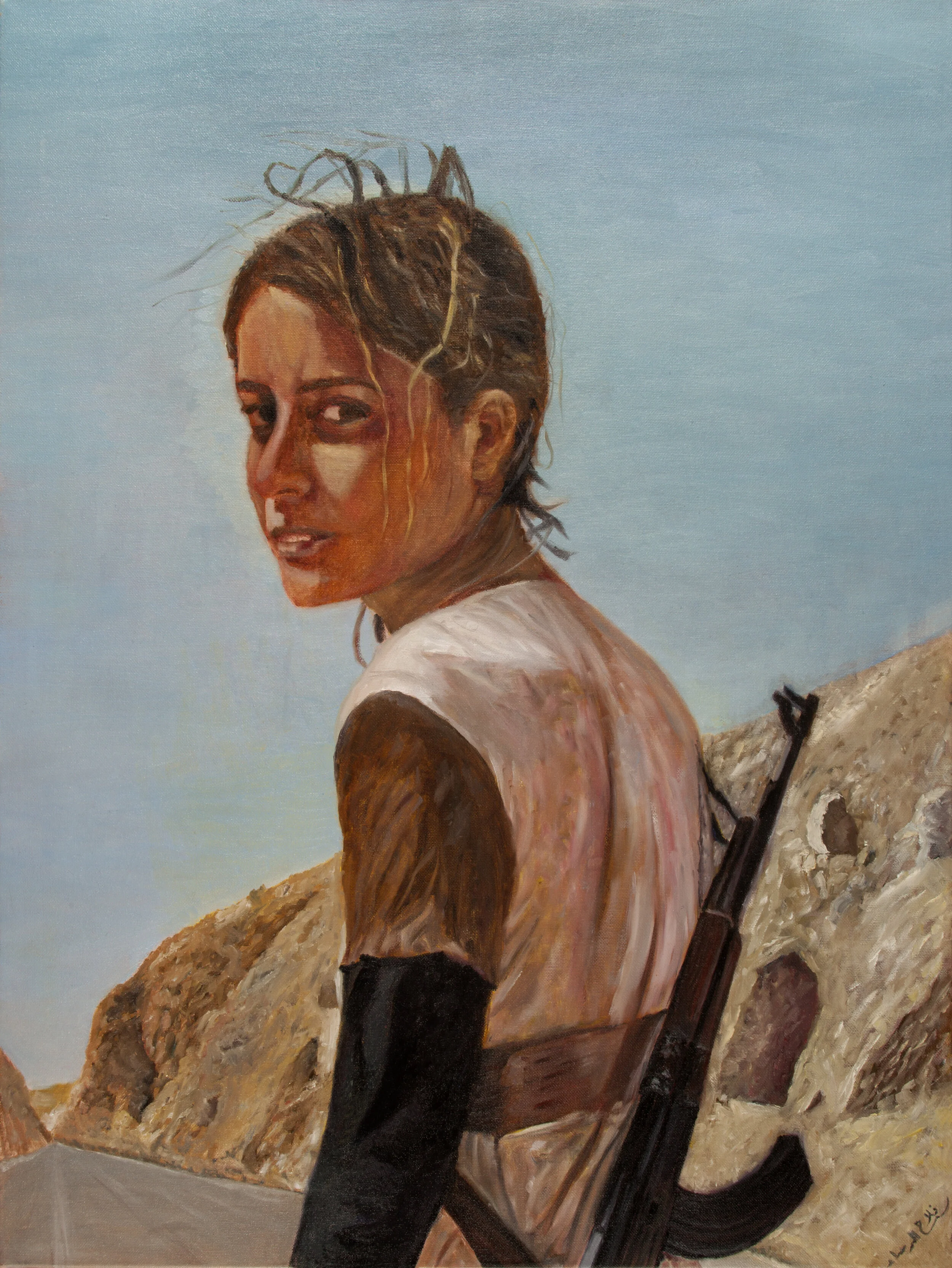
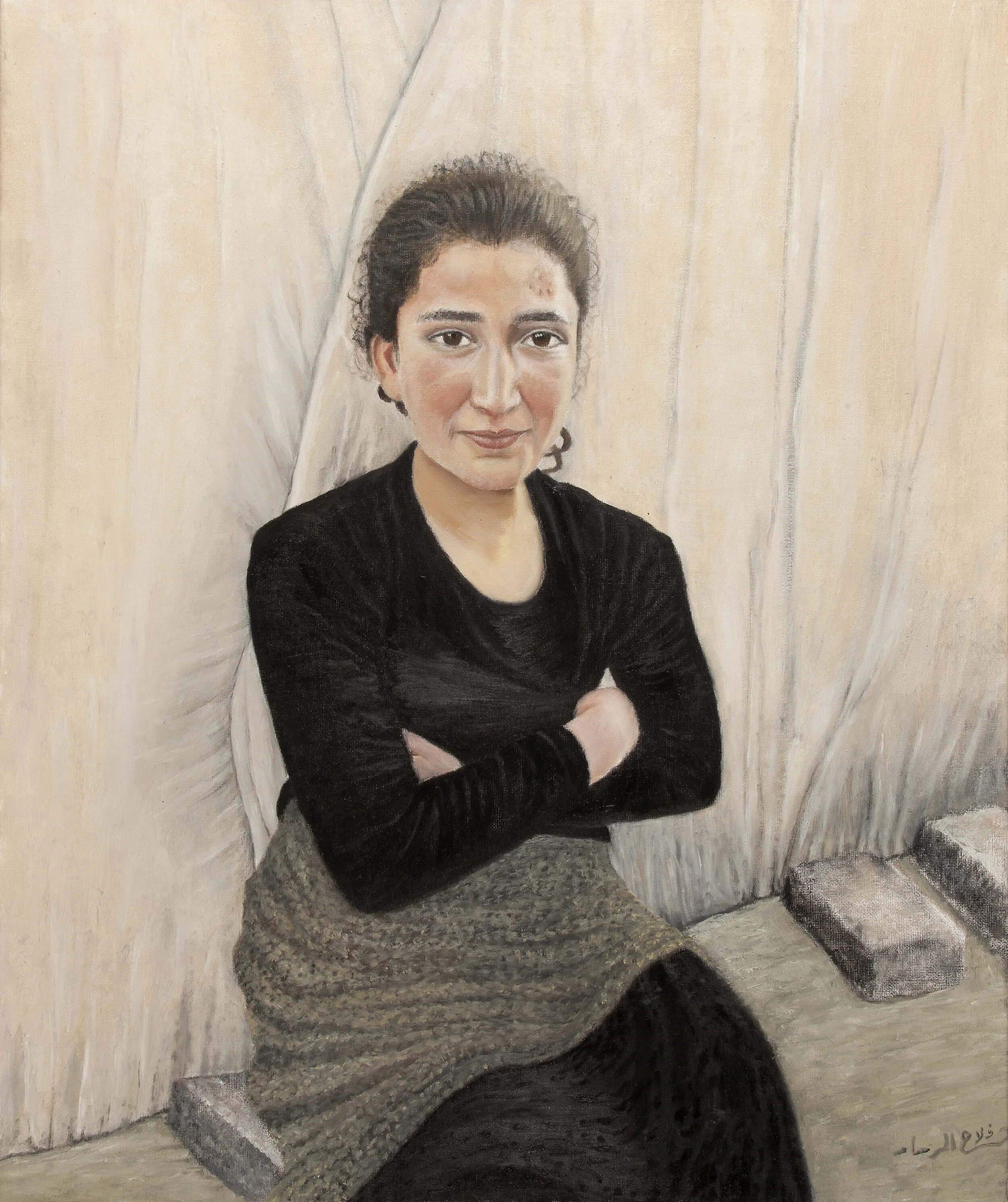
Falah is a Yazidi artist currently living in an IDP camp in Iraqi Kurdistan. He has lived in the camp by ISIS in the summer of 2014, a moment which marked the beginning of the latest genocide in his community’s long history of persecution and suffering. In the difficult conditions of the camp he has fashioned a new career for himself as an artist, adopting the pseudonym Falah Al-Rasam (the Painter). He has now sold several paintings and grown an online following for his artwork, even though he produced primarily written works before the terrible upheavals of 2014. “At that time I wrote poetry and stories about Yazidis,” says Falah, “but I prefer doing art, I see myself in art more than writing.” In Sinjar in 2014, an anxious period awaiting an attack by ISIS culminated in the offensive of 3 August.
Falah, his parents, and his five siblings were able to escape the following day, all together in one vehicle passing through checkpoints as ISIS militants fought SyrianKurdish forces near the border town of Rabia. While some of his family members have since moved to the Duhok region, Falah continues to live in the IDP camp, but a chance encounter in 2018 with an American woman living in his family’s village allowed him to realise his artistic potential. She brought paints and art supplies from Duhok and encouraged Falah to try his hand at oil painting, a skill he has quickly developed. Like his fellow Yazidi artists, Falah comments on the lack of opportunities in Sinjar before the crisis: “People didn’t care about art; actually, I didn’t care about art before 2014. Resources were very poor, and my vision to be an artist was poor.” Falah’s literary background and experience in writing poetry and short stories inspires his art.
Read the full storyShow less
He has read widely from French, English, and Arabic literature, and he is inspired by religious and philosophical works and authors such as Kahlil Gibran: “They taught me to understand life in a philosophical way, to understand life more”, says Falah. He now wants to deliver a message to the world through his artwork: “I have a strong desire to do something positive. Sometimes I look at the paintings and feel very happy that I have done that.” His own favourite painting depicts a famous photo of Yazidi female fighter carrying a weapon, in Sinjar in 2014. The woman is shown on a road leading to Yazidi villages, standing ready to defend her community. Falah painted this subject from a photograph and comments that the picture as a whole reflects those dark times.
Another untitled painting shows a young Yazidi girl in an IDP camp. Falah took photographs of her in 2019, just after she had been released following four years in captivity with her mother and siblings, and with her father still missing. In this work he has focused on the child’s innocent but emotional expression, hoping to convey to the world the stark reality of what has happened to such victims. Above all, Falah wants to secure the right for his people to live peacefully: “We want other nations and religions to live in peace and we want others to do that for us.” His message to the UN and other authorities is that the Yazidis need real deeds and not just promises, and that there should be greater transparency when it comes to international aid: “We want them to put the money in safe hands without corruption, and we want them to be careful about where the money is going.”
- Works in the exhibition
- Yazidi Fighter · 630 x 830 mm · Oil on canvas
- Yazidi Girl · 527 x 630 mm · Oil on canvas
Juliet Hassan
Yazidi artist, b. 1997, Iraq
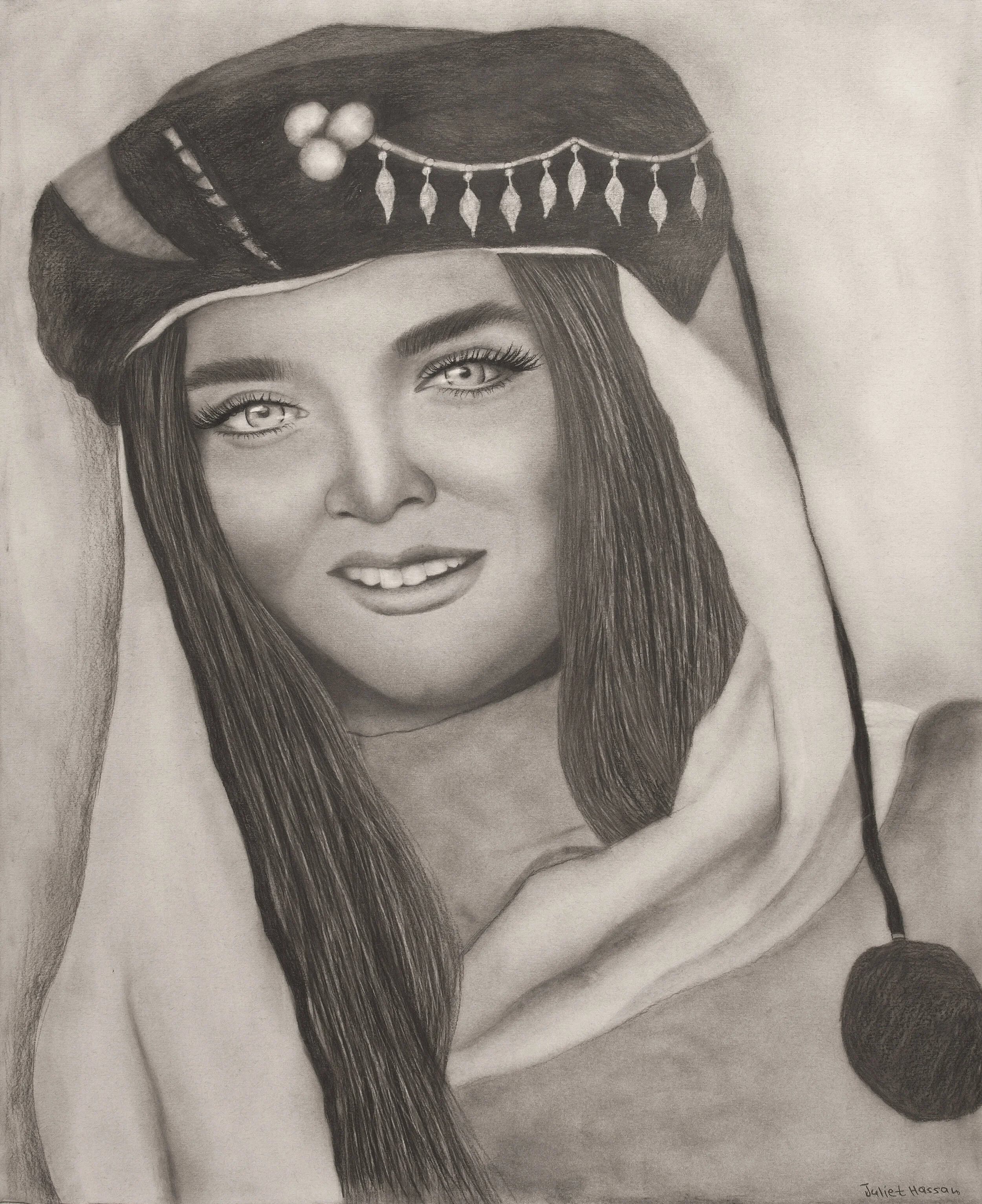
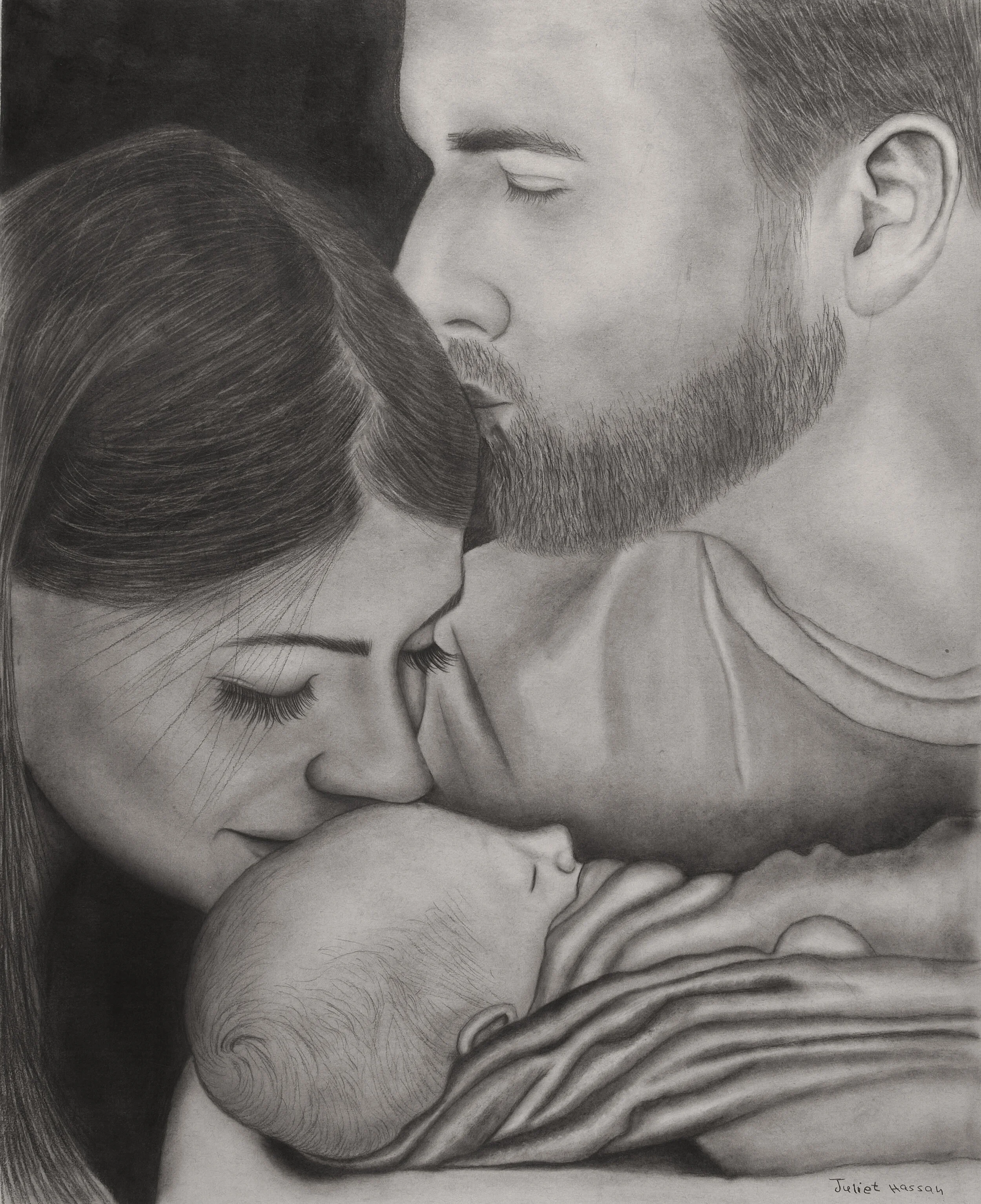
Juliet has been living in an Iraqi IDP camp since 2015. After the initial ISIS attack on her home region of Sinjar in August 2014, she and her family fled to the Syrian border and then to Duhok, and her father and youngest sister were subsequently taken in as refugees in Germany. Juliet was not permitted to join them as she was over 18 years of age. Juliet remembers a pleasant and simple life in Sinjar before the genocide, attending school and going on picnics with friends and family. Even on the eve of 03 August she did not believe the rumours that ISIS would attack.
“That night we heard and saw the bombs,” says Juliet, “and in the early morning we prepared ourselves with two cars to go to Mount Sinjar.” Among large crowds of Yazidis fleeing their villages and ascending the mountain, the cars broke down and Juliet and her family had to continue on foot, leaving food and water supplies behind. “My father was very sick,” she explains, “so we had to stay somewhere close by, not at the top of the mountain. We stayed in the same place for a week and received water and simple food from local farmers.” Juliet is fighting for her Yazidi community to be treated equally, and for her people to live in peace within Iraq, just as it is possible in other countries.
Read the full storyShow less
“I want the UN and international community to support those families who suffered a lot,” she explains, “and to encourage talented people to achieve their goals.” Above all she hopes for a society in which people of all backgrounds can live in peace, without racism and persecution. Juliet has always wanted to become a translator and to be good at languages. Since living in the camp, she has worked with NGOs and produced some paintings to help people understand Yazidi history and culture: “Art is something very important in my life,” she says. Juliet has quickly developed her skills at drawing with charcoal by following the example of other artists.
Her tender and warm-hearted drawing Peace depicts a young couple with a baby, foregrounding the theme of family. Juliet maintains that while ISIS tries to destroy the basic social element of the family, they will always be unsuccessful “because family members will stay together in peace whatever they try.” Yazidi girl in traditional clothes depicts one of Juliet’s friends wearing a Yazidi headdress, the komek u rashek. Promoting awareness and preservation of such customs is a crucial part of protecting Yazidi cultural heritage, one of Juliet’s principal aims in her work. She hopes to remind people in her community of their traditions, and when she searched to no avail for adequate pictures of this typical attire, her friend provided a photograph of herself dressed for a special occasion.
- Works in the exhibition
- Untitled · 655 x 760 mm · Charcoal on paper
- Yazidi girl in traditional clothes · 655 x 760 mm · Charcoal on paper
Sadiq Khedar
Yazidi artist, b. 1995, Iraq
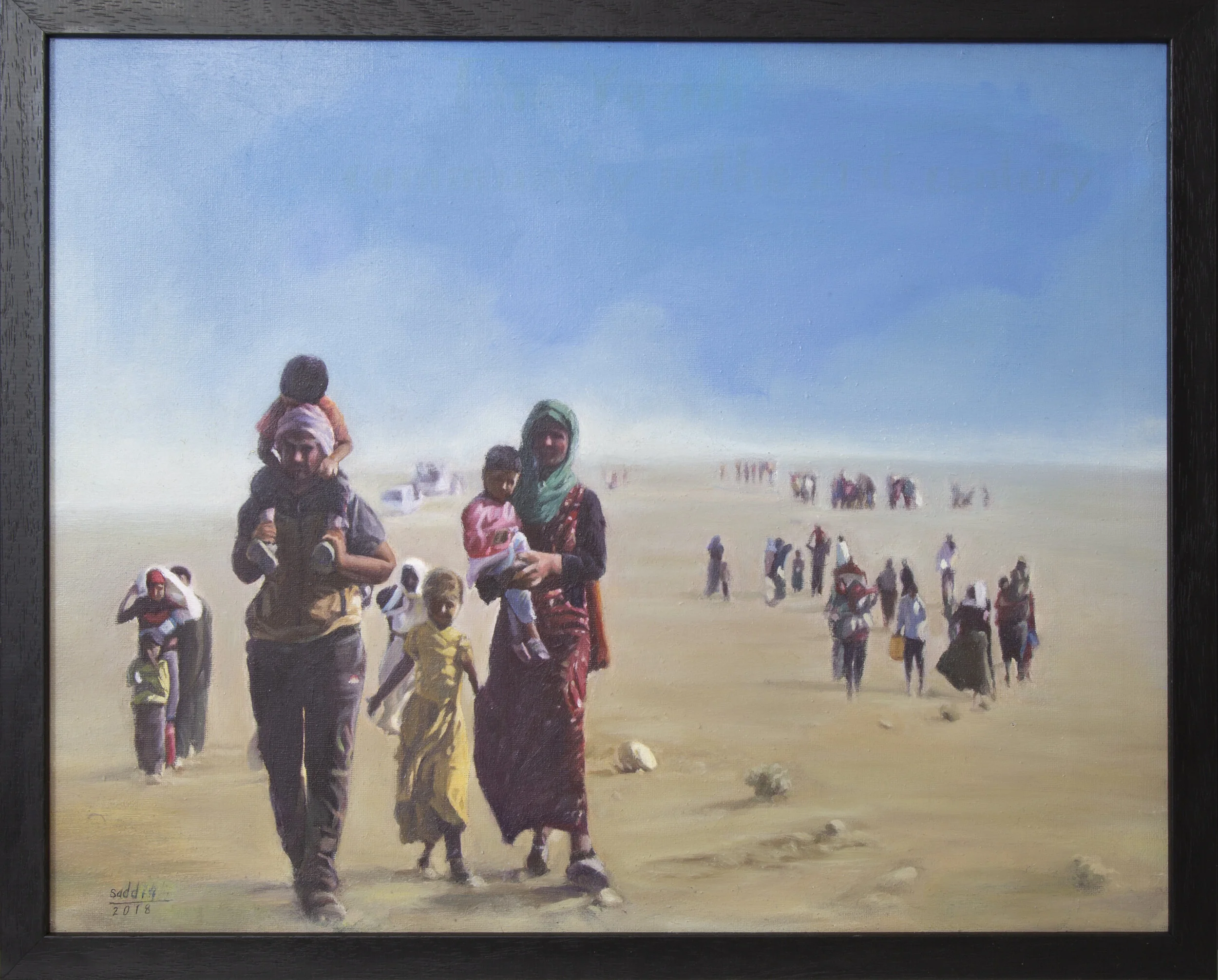
Sadiq is a young Yazidi artist from the Sinjar region of northern Iraq. For the past six years since the ISIS attack on his homeland began, he has been living in an IDP camp in Iraqi Kurdistan. While some of his friends and relatives have since returned to Sinjar province, Sadiq is unable to go back as his house was destroyed in the fighting when ISIS drove the Yazidi people out of their ancestral lands. Life in the camp is hard for Sadiq and his siblings – two brothers and one sister – with Sadiq working at the Ministry of Education to support his family financially. The Coronavirus pandemic has exacerbated the family’s hardships, as Sadiq has lost what little income he had.
Sadiq explains that isolation is a particular problem in the camp: “Now everyone is scattered around, there is no-one from my village in this camp. Some of the people I know are living in other camps or outside Iraq, but my family and I have been alone here for six years now.” He misses living among his own people before the genocide, but even now in the camp he thinks being reunited with some his community could make a world of difference: “Life would be better than it is right now. At least we could see each other, talk to each other; if one of us needs something the others could help them.” Sadiq has always been interested in drawing and art, although like many fellow Iraqis he points out that there was little to no support for artistic expression where he grew up.
Read the full storyShow less
He was inspired in part by Falah Al-Rasam (“the painter”) who taught him English in Sinjar, and whose works are also displayed in the Nobody’s Listening exhibition. Sadiq’s painting Fleeing from Death documents the most dramatic event of his life. The work depicts Yazidi families, with young children among them, on Mount Sinjar in the wake of the devastating attack on their communities by ISIS that began on 03 August 2014. Sadiq himself spent one week on the mountain and explains that he painted this picture in response to his sadness at seeing so many people, young and old, fleeing from danger without food, water, or even shoes. He painted what he saw with his own eyes, in order not to forget.
Sadiq hopes that his work can deliver a strong message to the world on behalf of his people. He wants the Yazidi community in Iraq to be recognized and to have the same rights as all other citizens: “I will tell you an example: now we are displaced people, and if we want to return to our home villages, we have to pay and lose our right to return to Kurdistan.” Sadiq hopes that the UN and international community can support Iraqi authorities to rebuild Sinjar and protect it from further attacks, and he asks the Iraqi authorities “to protect the Yazidi area well, not like before.” He is passionate about the role of art in the documentation of history and urges talented artists to continue developing their skills and to document events that they live through, just as he has done.
- Works in the exhibition
- Fleeing from Death · 530 x 430 mm · Oil on canvas
Saher Shaker
Yazidi artist (“Saher Art”), b. 1996, Iraq
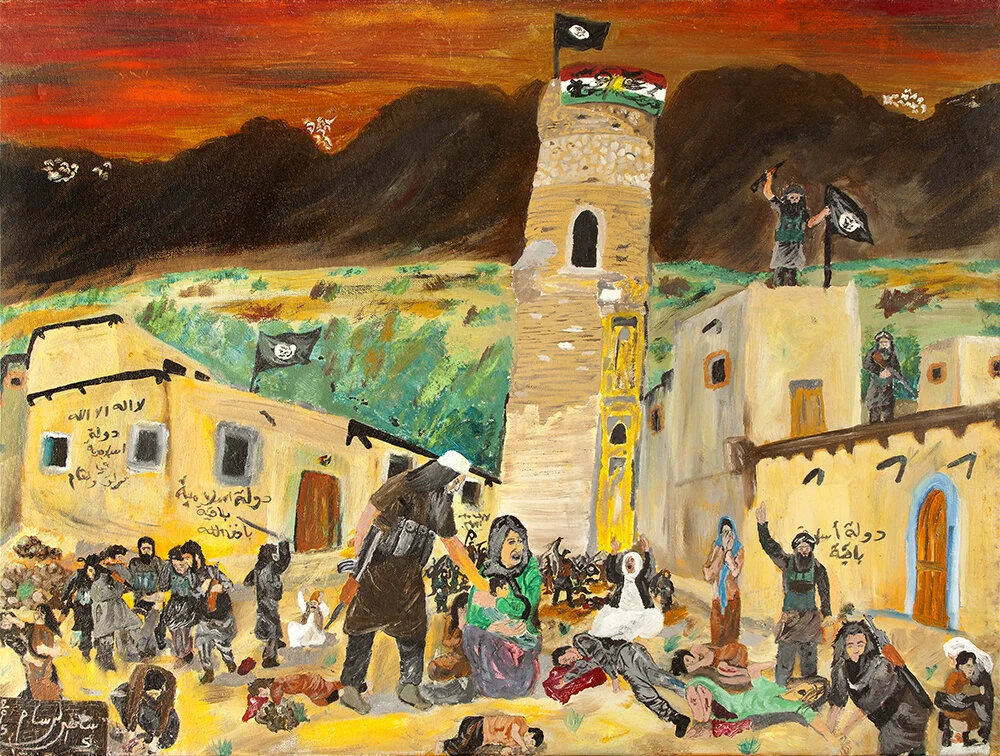
Saher is a young Yazidi Iraqi artist working by the name Saher Art. Since the ISIS attack on the Yazidi population in the Sinjar region of northern Iraq in August 2014, Saher and his family have been displaced and living in an IDP camp. He recalls a difficult start to life, as his family were considered enemies of the Ba’athist regime before 2003 and Saher’s family members, although well educated, could not be hired in government positions. “When the Ba’ath party fell, after that my family members were able to get jobs”, Saher explains. Before the 2014 attack he lived with his parents and six siblings in the village of Khana Sor, north of Mount Sinjar, and he says that the people felt safe and happy. Saher’s own dream was to become a nurse because he saw that there was a lack of medical staff and he wanted to help people in the medical field.
In the days leading up to the ISIS offensive on Sinjar in August 2014, everyone was afraid of an imminent attack and the possibility of losing loved ones. “During 3 August, some friends in the villages to the south of the mountain called to warn us that ISIS had begun attacking the villages,” Saher says. He and his family wanted to find a safe refuge, and there was nowhere to go except the mountain, where they would stay for eight days before fleeing to Duhok. On the mountain, children and elderly people were dying of dehydration and hunger, and news also reached those who had fled that people were being killed in the villages below. Saher says that life in the camp today is difficult particularly in terms of mental health: “When you are living in the camp you feel like you are always having psychological problems.
Read the full storyShow less
There are 8-10 people in one tent, and you have no place to comfortably paint or to relax. It has been six years and we are still living in the camps, so we are tired of being alive.” Art has at least been one effective outlet for Saher, who has been painting since 2015. He says he wanted to express the things he has seen and the suffering of his people through his paintings, and among the most impactful of these is his work entitled The Temple of Betrayal. It depicts the day ISIS invaded Sinjar and began its campaign of genocide against the Yazidi people. ISIS logos and flags can be seen on the walls and rooves of traditional buildings in an imaginary village that represents all Yazidi settlements in the Sinjar region.
Saher explains that the dark colouring of Mount Sinjar in the background represents the grief of his community, against a blood-red sky symbolising the horror of that day. Meanwhile, the white details in the distant mountains represent innocent Yazidi souls for whom there was no safe zone except on Mount Sinjar. Saher wants the painting to commemorate what he calls the betrayal by neighbouring communities who left his people at the mercy of ISIS. Saher has previously been victim to artistic censorship, having had numerous paintings confiscated, and he points out that there is no freedom for expression for artists in Iraq. This compounds the problem of insufficient financial and practical support. He also calls for international protection for the Yazidi community, with an emphasis on enabling displaced Yazidis safely to return to their home region.
A priority for Saher is mental health: “There are important causes of these mental issues. If there were job opportunities people would be occupied with their work; people live in utter poverty with no jobs, so life becomes increasingly difficult for them.”
- Works in the exhibition
- The Temple of Betrayal · 830 x 630 mm · Oil on canvas
Suhalia Dakhil Talo
Yazidi artist, b. 2000, Australia
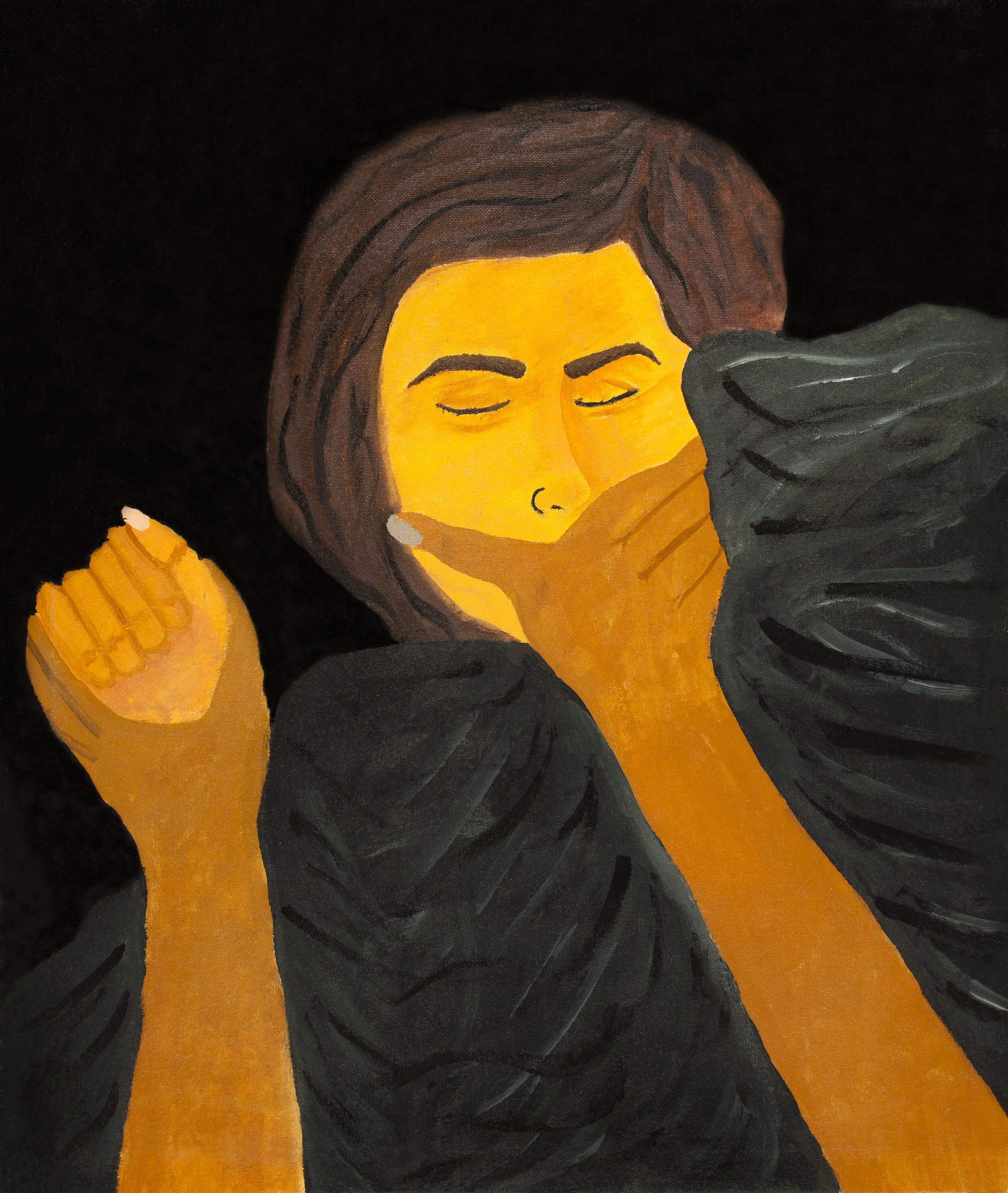
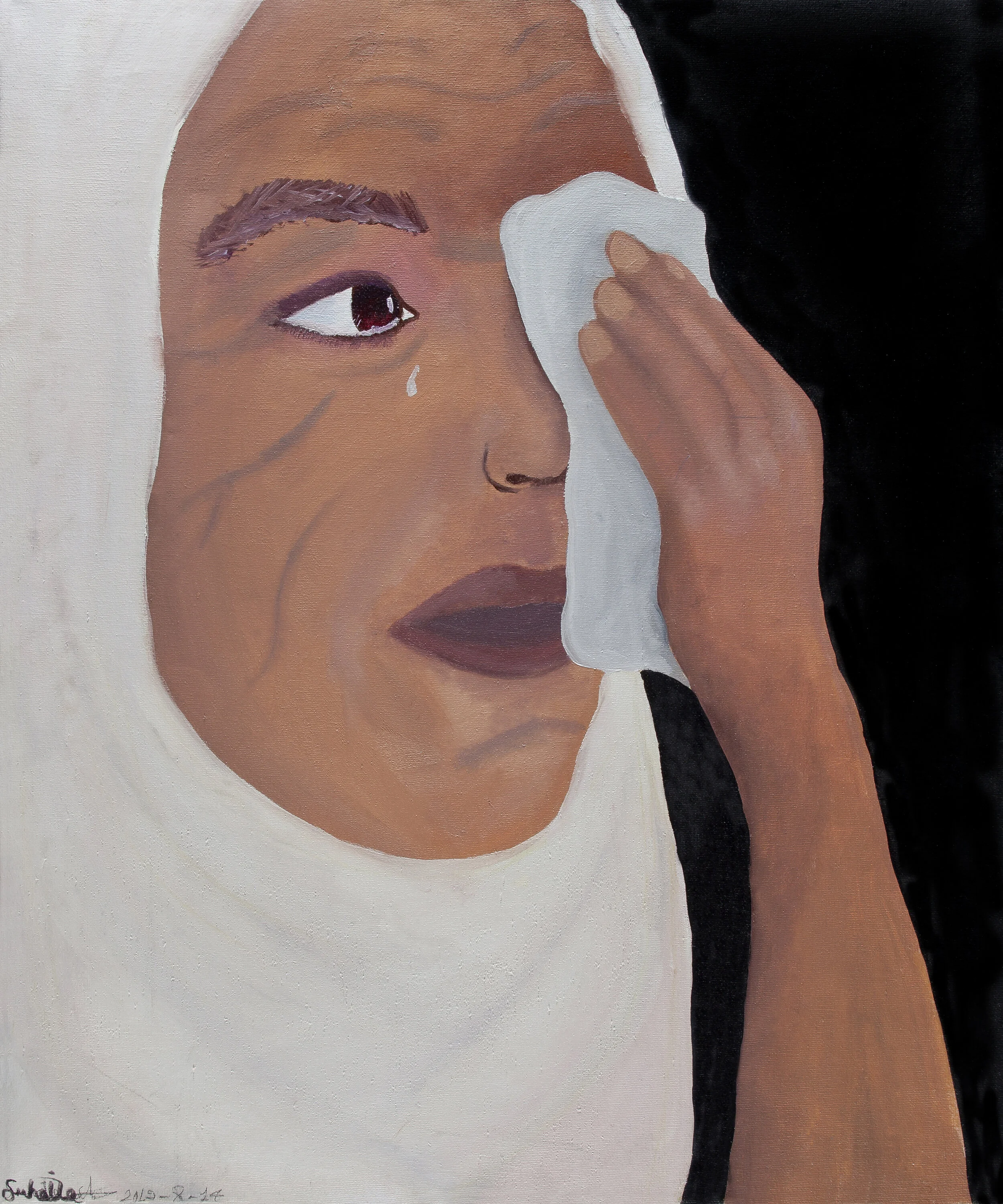
Suhalia is a young Yazidi artist currently living in Australia. As the ISIS attack on Sinjar began on 3 August, Suhalia and her large family attempted to flee the area in a single car that soon broke down. Forced to walk, she and her family were quickly rounded up by ISIS fighters, and Suhalia’s ordeal began. Aged just fourteen at the time, she was separated from her relatives and taken to Mosul, where she was kept in sexual enslavement for three years. She was told that her family had been killed, and she began to make artworks of their images to bring their memories back to life.
Although these pictures were immediately destroyed by her captors, she carried on drawing. The ISIS guards would take anything with which she could make images and on occasion even tie her hands to the prison bars. Unable to paint the faces of the people she loved, she regularly attempted suicide to escape the pain. In response, the guards rubbed salt into her wounds to prevent her making further attempts. Suhalia was bought and sold as chattel between ISIS fighters on eight occasions.
Read the full storyShow less
When international forces started to bomb ISIS positions in Mosul in 2017, Suhalia attempted to escape under the cover of their fire. She saw numerous friends killed in the blasts during these dangerous attempts, with which she persisted for two weeks. On 9 July 2017 she finally managed to escape, making her way to her uncle’s house and eventually to back to the rest of her family. Suhalia is now twenty years old and has continued to make art to remember what she endured. Her drawings allow her to bring back the memories of the people she has lost in her life.
Her untitled painting of a silenced Yazidi girl is based on the many she was imprisoned with who were beaten and tortured. It is a metaphor representing every powerless and voiceless survivor of ISIS violence. Suhalia wants to use her work to spread a message about what happened to her, and what more needs to be done. The work is also a metaphor, representing every powerless and voiceless survivor.
- Works in the exhibition
- Untitled · 530 x 620 mm · Oil on Canvas
- Untitled · 535 x 625 mm · Oil on Canvas
Jamil Soro
Yazidi artist, b. 1972, Germany
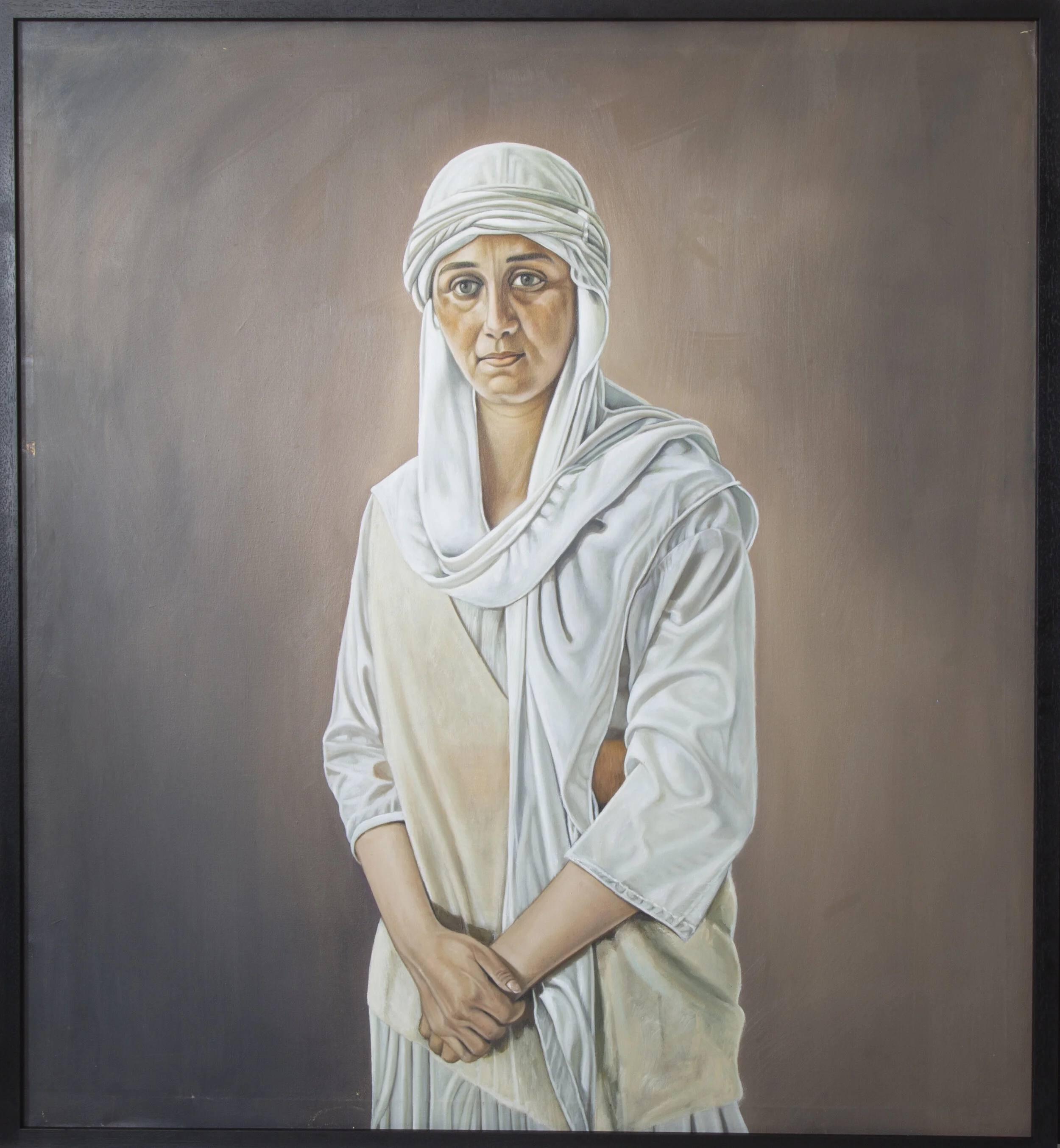
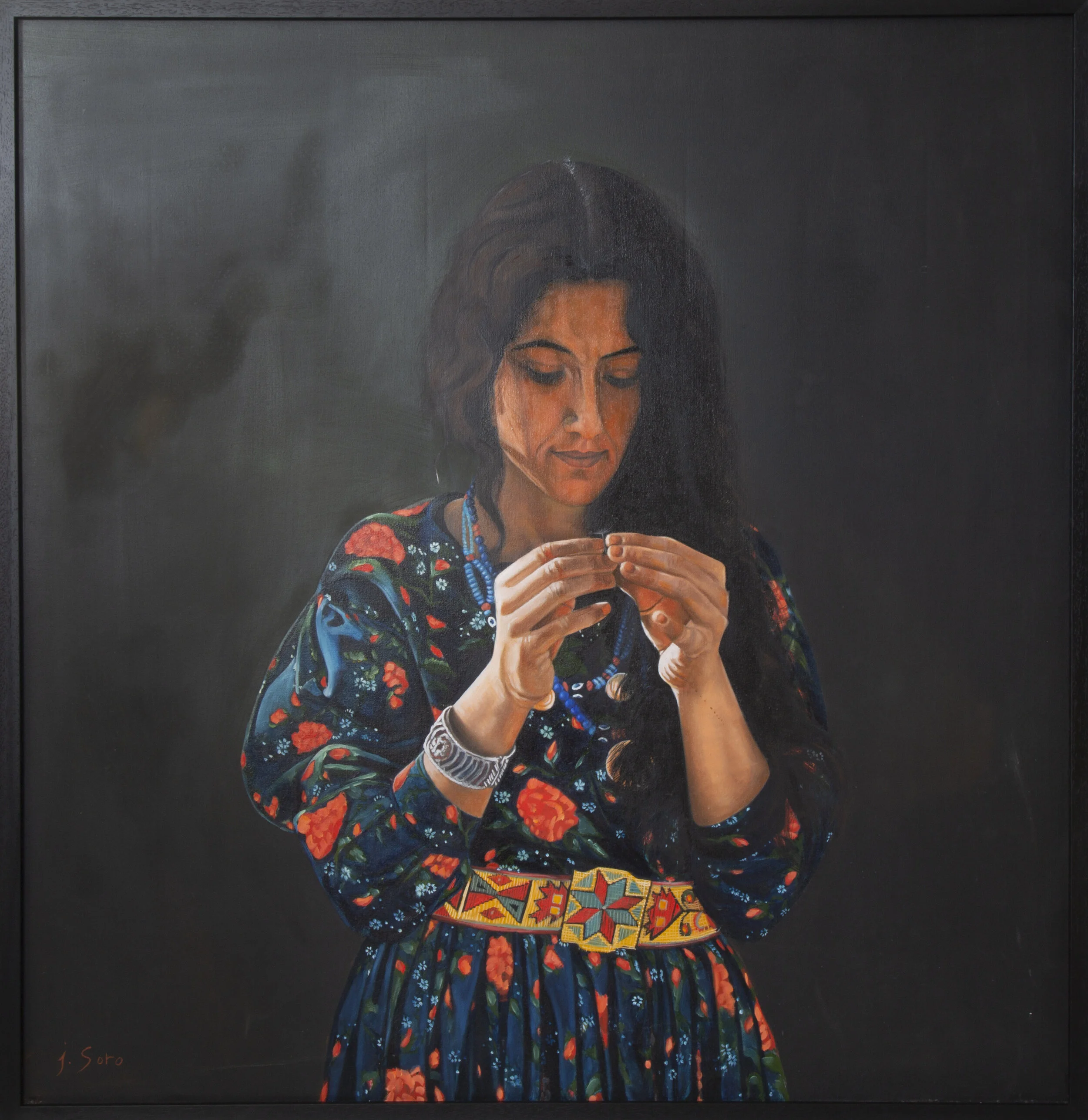
Jamil is a Yazidi artist from the town of Afrin in northern Syria. He has lived in Germany since before the 2014 genocide perpetrated by ISIS, having fled persecution in Syria ten years earlier via Lebanon and Greece. From an early age he has wanted to depict Yazidi culture and suffering, and to show the world what it means to be a Yazidi. Even in his home region in Syria, where relatively many Yazidis lived, it was a frightening experience to be outcast and treated with suspicion. “Every time we said we were Yazidis,” says Jamil, “people took distance from us, went away from us.”
Long before the genocide, many Yazidis were forced to hide their identities to protect themselves: “We wanted to say who we are, but we were afraid what would happen, afraid that they would not treat us as fellow humans.” Observing the events of 2014 from Germany, he felt helpless: “It is impossible to describe how much pain I felt; it was impossible for us to do anything,” he says. In Syria Jamil practised his art from the age of six and later studied while also working in industry. He formally learnt his craft at the Institute of Fine Art in Aleppo and says he has practised every day since. To Jamil, the Yazidi culture is a compelling and worthy subject for his art.
Read the full storyShow less
“Yazidi people are everything that is beautiful,” he says. “We have faith in humanity and humans. Whenever something bad happened to us, we were only defending ourselves, it was never an attack from us.” Jamil’s untitled painting of a Yazidi woman with a dandelion is intended to give hope to all those who view it – he stresses that each person may decide for themselves which of their hopes or wishes they would like to see represented by the work. The painting entitled Children of God shows a Yazidi woman in traditional and symbolic white dress, the colour of God.
“Even when people do not wear white it is still part of our culture,” Jamil explains. The principal message that Jamil wants to convey with his work relates to the theme of shared humanity: “We want the people of the world to be humanitarian, to see that we are not non-believers and we do not want to do any harm. I want people to learn more about Yazidis.” Furthermore, Jamil wants international stakeholders and those in positions of authority to provide specific help to his people, and to identify them as a community of equal value to all others: “They should see that we are also humans, and we want to be treated as humans.
We all have eyes and noses; we are all human.”
- Works in the exhibition
- Yazidi girl in traditional robes · 925 x 998 mm · Oil on canvas
- Wishes · 1013 x 1036 mm · Oil on canvas
Hussam Sameer
Artist, Iraq
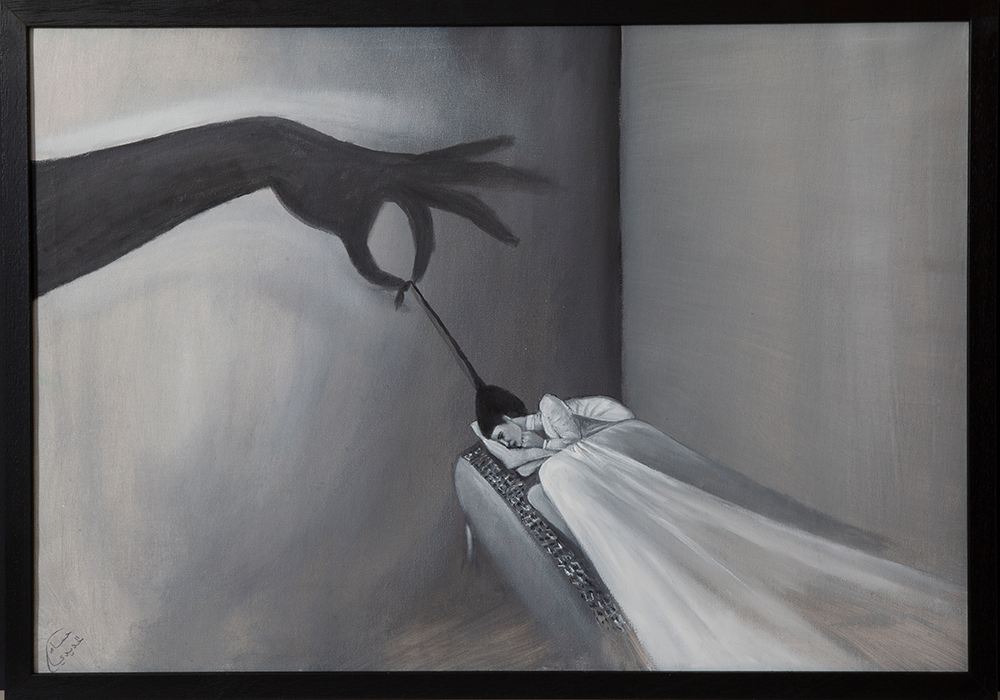
Hussam was a soldier in the Iraqi Army when ISIS launched their offensive on Mosul in 2014. After enduring poor health and months in an IDP camp, he began retraining as a painter, which gave him hope and strength. His work here ‘interprets the nightmares women had when they lost their loved ones, the moments of ripping the soul’.
- Works in the exhibition
- Stealer of Dreams · 725 x 515 mm · Mixed Media on paper
Yahya Ajam
Artist, actor and director, Iraq
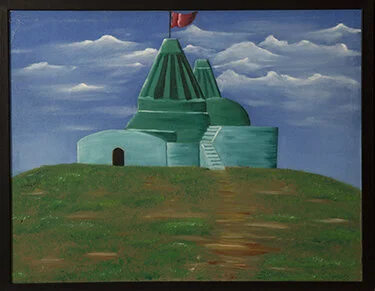
Yahya is an artist, actor and director from the Tal Afar District of Nineveh. A former soldier who fought against al-Qaeda, he and his family were displaced to Baghdad for five years when ISIS took control of Nineveh. Yahya has since returned to his hometown and is ‘looking forward to a safe and stable environment that guarantees a decent life for me and my family, an environment of security, safety, love, and peace’.
- Works in the exhibition
- Khidr Elias Temple, Tal Afar · 670 x 530 mm · Mixed Media on paper
Artist biographies are taken from the Nobody’s Listening exhibition catalogue. All works remain the property of the artists. Tap any image to see it full size.
See the full collection, or talk to us about bringing the artists’ work to your venue.
View the artworkHost the exhibitionNobody’s Listening is produced by Upstream XR · See the project at upstreamxr.com